
Medical technology specialist venture capital firm Bioshore Ventures will shortly announce a final close for its first fund at $27 million. The capital has already been committed across eight early-stage companies.
According to general partner Jeff Reid, Bioshore is Australia’s only venture capital firm that invests only in medical technologies − that is physical medical devices and technologies. The firm does not invest in the development of drugs or other forms of medical treatments.
The Bioshore investment thesis is based on the risk/return profile for medical technologies being much narrower than for biotech. About 92% of novel molecules developed by biotech companies fail to be commercialised, including many that pass Phase 1 human clinical trials. The very high returns generated in the biotech sector come from just 8% successfully commercialised. Consequently, biotech investors need to cover a wide range of projects to ensure success.
In contrast, around 75% of medical technologies that make it to human trials go on to be successfully commercialised. Returns are significantly lower than for the biotech sector but can still be substantial, as demonstrated by technologies such as Cochlear (ASX: COH) hearing implants and Resmed (ASX: RMD) sleep apnea devices. Of the 75% of medical technologies that are successfully commercialised, Reid says returns are generally in the range 5-25x.
The sector also has the advantage of less demanding regulatory thresholds than biotech and much more predictable routes to commercialisation. Reid said many of the medical investors in Bioshore’s fund have been able to provide specialist due diligence on technologies it considered for investment and are able to monitor progression of those technologies toward commercialisation.
Bioshore has raised its fund under the tax-advantage Early Stage Venture Capital Limited Partnership (ESVCLP) legislation with the vehicle currently provisionally registered as an ESVCLP fund. ESVCLP funds require a minimum of $10 million to be raised and are limited to a maximum of $200 million.
Investors in ESVCLP funds are entitled to carry-forward 10% offsets on their annual tax, based on their investments. In general, these investors will also be exempt from tax on income and capital gains generated by disposal of eligible investments of the fund.
Investors in the Bioshore Ventures fund are high-net-worth individuals, most of them – 40 of 65 investors – surgeons and clinicians including specialists in vascular medicine, orthopedics and cardiology. In addition to the medical investors, the fund has attracted support from private capital investment professionals. These include Quadrant Private Equity managing partner Marcus Darville; Paradice Investment founder David Paradice; Kuala Lumpur-based co-founder of growth capital firm Navis Capital Rodney Muse and Navis partner, and head of the firm’s Sydney office, Philip Latham.
Bioshore’s investment team comprises three general partners: Reid, the founder of several medical sector start-ups; Andrew Fox-Smith, a former president, international, of Enovis Rehabilitation; and David Bottomley, co-founder of Ryder Capital (ASX: RYD).
Bottomley is also managing general partner of the Ryder Innovation Fund a registered ESVCLP. Bottomley joined the Bioshore partnership in March last year. Prior to that, Bottomley had served on the board of regenerative biologic therapy technology company Tetratherix (ASX: TTX) from March 2020 to December 2025. Before it began raising the current fund, Bioshore was heavily involved in commercialising the Tetratherix platform. Bioshore co-founder Will Knox took on the chief executive role with Tetratherix prior to its listing. Knox remains a member of Bioshore’s advisory board.
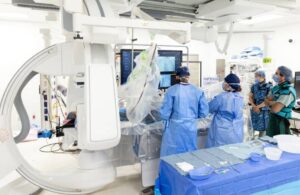
The Bioshore Fund 1 has been invested in Leo Cancer Care, which is developing new delivery technology for radiation therapy; Remedy Robotics, robotic cardio vascular surgery which can be operated remotely; Kitea Health, new form of hydrocephalus care; Nanomedx, carbon nanoparticle platform technology; wellumio, new approach to acute stroke care; Vevex, new vascular imaging technology; Tutelix, purpose designed thermal responsive oncology spacing technology; and Medlogical Innovations, cooled laser focal therapy for the prostate.

Bioshore plans to raise a second fund, with a target of at least $50 million, next year. The second fund will seek investment from institutional investors as well as high-net-worth individuals.
Image: Remedy Robotics has developed a robotic cardio vascular surgery system which can be operated remotely.